Big Update: Sindh Assembly Turns Down JI’s Move to Raise E-Challan Fines
Introduction
Sindh Assembly Rejects JI Move to Raise E-Challan Fines, session on Thursday when Jamaat-e-Islami (JI) presented a resolution demanding an increase in e-challan fines. This proposal immediately sparked debate, especially at a time when Karachi and other parts of Sindh are already discussing traffic rules, digital fines, and automated enforcement.
Within minutes, the Assembly rejected the resolution, marking a major update for motorists across the province.

Sindh Assembly Rejects JI Move to Raise E-Challan Fines
The Assembly clearly refused to consider the proposal because it directly interfered with an ongoing court case. Lawmakers emphasized that no legal amendments or changes could be discussed while the matter remains under judicial review.
This was the core reason the house swiftly dismissed JI’s suggestion without further process.
Why JI Wanted to Increase E-Challan Fines
JI argued that harsher penalties would encourage drivers to follow traffic rules more strictly. Their belief was simple: higher fines result in safer roads.
They insisted that raising penalties would reduce violations like overspeeding, signal-breaking, and illegal lane cutting.
JI’s Resolution Faces Immediate Objection
The PPP strongly opposed the motion. Members claimed the resolution was out of context and poorly timed.
Their key objections included:
- It wasn’t the right moment to discuss the issue
- The matter was legally sensitive
- The Assembly could not override court procedures
Sharjeel Memon Opposes the Proposal
Sindh Minister Sharjeel Inam Memon delivered the strongest rebuttal. He reminded the house that the e-challan matter was already under judicial review.
Key Arguments Shared by Sharjeel Memon
He made the following crucial points:
- The issue is sub judice — meaning the Assembly legally cannot debate it.
- Bringing a court case into the Assembly is unconstitutional.
- Karachi records more challans simply because more people drive daily.
- Public safety must remain the main goal, not revenue collection.
- The government won’t impose unnecessary financial pressure on the public.
His speech made it clear that any attempt to increase fines without court approval would be unfair and unlawful.
Speaker Declares the Resolution ‘Null and Void’
After evaluating both sides, the Speaker announced that the resolution was invalid.
His ruling was based on:
- The resolution misleading the House
- Violating Assembly rules
- Involvement of an active court case
No voting was conducted, and the issue was closed immediately.
Government’s Official Stance
The government clarified that the e-challan system aims to improve road safety — not to generate extra income.
PPP members said the goal is discipline, not punishment.
Why the Government Rejected Higher Fines
- Increased fines could hurt citizens already struggling with inflation
- Awareness campaigns work better than steep penalties
- Karachi’s high number of challans reflects traffic volume, not poor driving alone
The government insisted that no changes would be made without following proper legal channels.
Background of Sindh’s E-Challan System
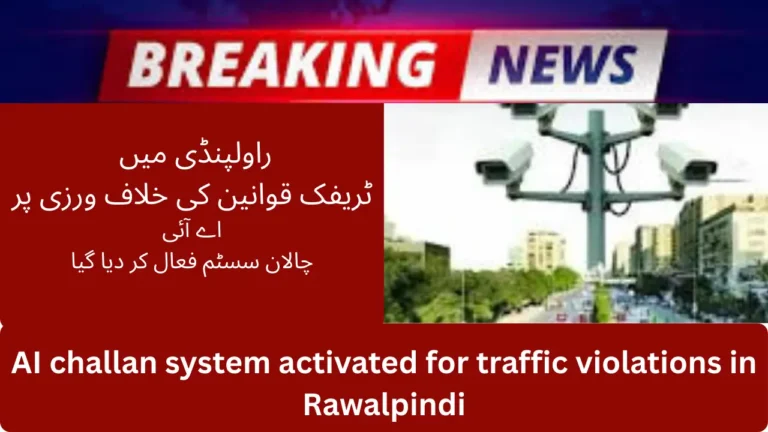
Sindh’s digital challan system has expanded rapidly. Thousands of cameras installed across Karachi automatically detect violations.
Common violations include:
- Red-signal jumping
- Overspeeding
- Wrong-lane driving
- No helmet
- Illegal parking
- One-way violations
How Digital Cameras Detect Violations
Advanced cameras:
- Record vehicle numbers
- Capture proof of violations
- Reduce human involvement and corruption
- Generate e-challans automatically
This system is designed to increase transparency and accuracy.
A Light Moment: ATMs Coming to the Assembly
Despite the tension, the Speaker added humor by announcing that ATMs would soon be installed inside the Assembly building. This small remark went viral and brought a lighter tone to the session.
Session Adjourned Until Friday
The Speaker concluded the session and adjourned it until 10 AM on Friday. For now, the idea of raising e-challan fines is completely off the table.
Why This Decision Matters for Citizens
1. No Increase in Fines
Motorists will continue to pay the same fine amounts as before.
2. Legal Clarity
Changes will only be made after the court reaches a final decision.
3. Transparent Governance
The Assembly avoided interfering with ongoing legal matters.
4. Financial Relief During Inflation
The decision provides relief to the public already facing high living costs.
Conclusion – Sindh Assembly Rejects JI Move to Raise E-Challan Fineshttps://e-challann.pk
The Sindh Assembly’s decision highlights the importance of respecting court procedures and protecting public interests. For now, the government has made it clear that no additional financial burden will be placed on citizens. The e-challan system will continue without any changes until further orders from the court.
Motorists across Sindh can breathe easy — there will be no increase in e-challan fines anytime soon.
FAQs
1. Why did the Sindh Assembly reject JI’s proposal?
Because the matter is already in court and cannot be discussed constitutionally.
2. Will the government increase fines in the future?
Only if the court allows and after thorough evaluation.
3. Are current e-challan fines still valid?
Yes, no changes have been made.
4. What violations commonly lead to e-challans?
Red-signal jumps, overspeeding, wrong-lane driving, no helmet, and one-way violations.
5. Does Karachi have more challans because of poor traffic habits?
Not necessarily — Karachi simply has more vehicles than other cities.