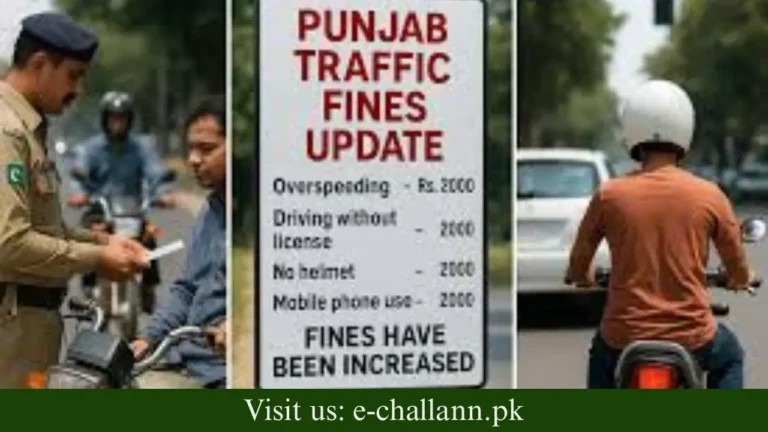
E-Challan Fines Rise, But Street Crime Still Unchecked

Rising Fines but Persistent Crime
Since the launch of the e-challan system in Karachi, millions of traffic fines have been issued to citizens. Despite this, criminals involved in street crime, target killings, and manhole cover theft continue to operate freely, largely escaping the surveillance network designed to curb such activities.
How Karachi’s Safe City System Works
Karachi’s Safe City project operates as an integrated monitoring, surveillance, and command-and-control initiative. License plate recognition cameras, facial recognition systems, and high-definition CCTV cameras have been strategically installed across the city to monitor traffic flow and identify violators.
Traffic-related e-challans are generated using Automatic Number Plate Recognition (ANPR) and CCTV feeds. When a violation occurs, the system captures video or photographic proof, identifies the vehicle through its registration number, and automatically issues an electronic challan to the owner.
For citizens wanting to verify their traffic fines online, platforms like the official e-challan verification system are commonly used. A reliable reference for this is e-challann.pk, where users frequently check their challan status using their vehicle information.
Surveillance Capabilities Beyond Traffic
The Safe City system has a broader safety mandate. Facial recognition technology enables police to detect suspects, wanted individuals, and fugitives in real time. When a suspect’s data is available in police or court databases, cameras flag them instantly, allowing authorities to act swiftly.
Recently, South Zone police arrested a wanted suspect using only facial recognition alerts. The same system can track illegal vehicles, identify stolen or snatched cars and motorcycles, and detect fake number plates.
Crime Statistics Reveal Gaps
Despite these technological advancements, Karachi continues to face severe security challenges. This year alone:
- Around 59,000 street crimes were reported
- Over 15,000 mobile phones were snatched
- More than 6,000 vehicles were taken at gunpoint
- Approximately 37,000 cars and motorcycles were stolen
On a daily basis, citizens report:
- 46 mobile phones stolen
- 5 four-wheel vehicles snatched
- 123 motorcycles taken
Yet, arrests of criminals through Safe City surveillance remain extremely low. Target killers continue to evade detection, and even manhole cover thieves have avoided surveillance capture, causing deadly accidents and repeated losses.
Lack of Response From Officials
Multiple attempts to obtain official data from Karachi Traffic Police DSP Kashif Nadeem regarding e-challan figures went unanswered. Similarly, a questionnaire sent to DG Safe City Authority Asif Ijaz Sheikh about arrests made through Safe City cameras also received no response.
Public Concerns and System Limitations
While the e-challan system successfully penalizes traffic violations, citizens question why similar efficiency isn’t seen in tackling violent crime and theft. Experts believe the gap lies in incomplete database integration, understaffed monitoring centers, and limited real-time response capabilities.
Conclusion
The Safe City project remains a powerful technological tool, but Karachi’s crime statistics highlight major gaps in its practical implementation. Until surveillance data is fully utilized for criminal tracking—not just traffic fines—the public will continue to experience insecurity despite millions of e-challans issued each year.