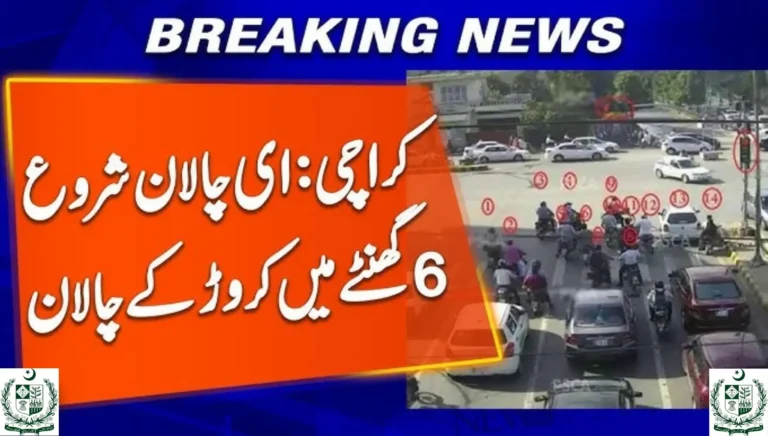
Karachi’s New E-Challan Trap: Why Drivers Are Getting Fines Even at the Correct Speed

Karachi’s traffic system has entered a new era — an era where cameras watch every turn, every lane change, every slight push on the accelerator. The promise was simple: fair, automated, corruption-free challans.
But soon, an unexpected mystery emerged:
People started receiving e-challans even when they swear they were driving at the ‘correct’ speed.
Is it a glitch? A system flaw? Or something deeper?
Let’s break down the entire story — clearly, step by step.
What Is Karachi’s New E-Challan System?
Karachi e challan has shifted to a completely faceless, automated traffic enforcement model.
- High-resolution AI cameras
- Automatic number-plate recognition
- Instant challan generation
- Digital record against your vehicle
No traffic officer waves you down.
No warning.
Just a challan arriving without human interaction.
The Promise — And the Shock
The new system promised:
- Accurate detection
- No bribery
- No discrimination
- 100% fairness
But within days, social media exploded:
“I got a challan but I wasn’t overspeeding!”
“My speed was within the limit—still fined!”
Suddenly, the system designed to fix problems started creating new ones.
Why Are People Getting Fines Even at the Correct Speed?
A. Camera Misreads
Sometimes the system reads your plate incorrectly, especially when:
- Lights reflect on plates
- Plates are dusty or stylized
- Angle of vehicle confuses the lens
This can link a violation to an innocent driver.
B. Speed Interpretation Errors
Few drivers reported:
- The camera caught them at the exact moment of acceleration
- Speed limit signs were unclear or missing
- Temporary diversions not recognized by system
- System reading momentary speed spikes as violations
C. Wrong Vehicle, Same Number Pattern
If a number plate looks similar to yours:
- One blurred frame
- One shadow
- One overwritten pixel
…can send the challan to your name.
D. Outdated Software or Sync Delays
Sometimes the issue isn’t the road — it’s the backend:
- Delayed server updates
- Frame glitches
- Wrong location tagging
- Duplicate reads
Drivers doing everything right still get flagged.
What to Do If You Think Your Challan Is Wrong
Don’t panic. You can challenge it.
Follow these steps:
- Check the challan details — time, location, violation type.
- View the attached photo/video (if available) and compare with:
- Your route
- Your number plate
- Your dashboard footage
- Take screenshots
- Record your side of the story
- Visit a traffic facilitation center and file a dispute
- Get the first challan waived, if proven mistaken
Appeals are simple — and many wrong challans DO get corrected.
How to Protect Yourself From Wrong E-Challans
Drivers can avoid most issues by taking small precautions:
- Keep standard number plates
- Avoid fancy fonts and reflective plates
- Clean plates frequently
- Follow posted speed limits
- Avoid sudden acceleration near camera zones
- Install a dashcam if possible
- Check your challan status weekly
This way you always stay ahead of surprises.
Karachi’s E-Challan System: A Double-Edged Sword
There’s no doubt:
The new system can bring discipline to Karachi’s chaotic roads.
But when technology becomes too aggressive — or imperfect — it can create frustration instead of fairness.
The goal is safer roads, not fear of unexpected challans.
The system is new, still learning, still being tuned.
With time, accuracy will improve — but until then, drivers need to stay alert, informed, and proactive.
Final Thoughts
Karachi’s e-challan mechanism is powerful, modern, and necessary.
But its current phase feels like a testing ground, where even rule-following drivers sometimes get caught in the crossfire.
Until everything becomes stable:
- Drive carefully
- Check your challans regularly
- Keep proof of your innocence
- And always know: you have the right to dispute a wrong challan